
Palo Alto County Sex Offender Checks
The Iowa Sex Offender Registry is the primary source for a Palo Alto County lookup, and its official registry explanations clarify the state's terms and cautions. Iowa Department of Public Safety and its Division of Criminal Investigation manage the statewide system. The Palo Alto County Sheriff handles local registration and verification duties under Iowa Code section 692A.120. These roles work together, but they are not two separate public lists. The state portal is the public search. The sheriff is the local point for procedure, a suspected failure to register, or an address concern.
Start with the narrowest facts available. A full name can separate a known person from a broad area list. A street, city, ZIP, radius, or Palo Alto County filter serves a place-based check. Searchers should compare identifiers within the public profile instead of relying on a name alone. Common names and past aliases can produce the wrong match. The registry covers a specific legal duty and should not be read as a complete account of every criminal case in Palo Alto County.
For the larger court record behind a filed Iowa case, use the county’s Court Case Lookup. A registry result and a court docket answer different questions.
Palo Alto County Offender Registration Office
Local registration work goes through the Palo Alto County Sheriff at the Public Safety Center, 2002 10th Street, Emmetsburg, Iowa 50536. The published phone is 712-852-3535. Iowa law assigns sheriffs registration and verification tasks, while the DCI maintains the statewide public registry. A registrant should call before arriving to confirm the current reporting procedure, required documents, and timing. The research did not locate a separate online appointment tool or a published Palo Alto County registry-counter schedule.
Palo Alto County Sheriff
Public Safety Center
2002 10th Street
Emmetsburg, IA 50536
712-852-3535
Local registration, verification, and suspected noncompliance questions
The office also receives local reports about information that may be stale or a registration duty that may not have been met. A public user does not investigate that concern. Note the profile, the disputed fact, and the reason for concern, then let the sheriff or DCI review it. Call 911 only when there is an immediate threat.
Note: The Iowa portal remains the public search source even though the Palo Alto County Sheriff carries out local verification duties.
Iowa Sex Offender Registry Searches
The registry supports both person-based and place-based research. Its controls can change, so read the live labels and terms before submitting a search. A Palo Alto County filter narrows statewide results, while a city or address search can focus on Emmetsburg, Graettinger, West Bend, or another community. Registrant Watch is a notification option based on an address or area. It serves a different need from checking the result list once.
- Open the official Iowa registry and read the conditions of use.
- Choose a name search or a location and address search.
- Enter the known fields, using Palo Alto as the county when a local list is needed.
- Review the list or map, open the matching profile, and compare all public identifiers before drawing a conclusion.
| Field or control | Type | Required | Use |
|---|---|---|---|
| First and last name | Text | Optional | Searches identifying name fields; last name is the main name filter. |
| Street or address | Text | Optional | Starts a geographic search when combined with place details. |
| City, county, or ZIP | Text or selection | Optional | Limits the search to Palo Alto County or a named community. |
| Radius | Selection | Optional | Sets the area around an address when the live interface offers it. |
| Map or list | View control | No | Changes the way geographic results are displayed. |
| Registrant Watch | Signup | Optional | Provides notifications tied to an address or area. |
The official registry search screen shows how name and location routes share one statewide source.
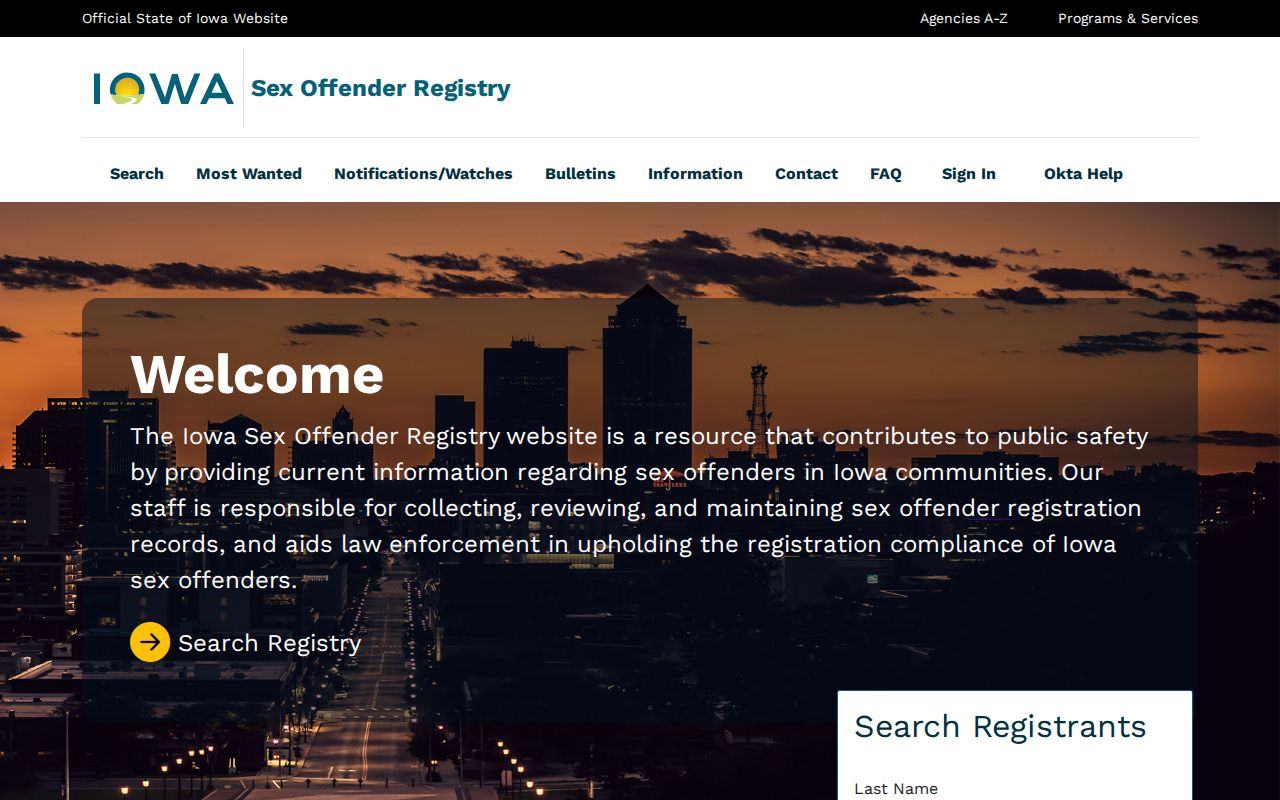
This interface is the right starting point for current Iowa public registry information, with the Palo Alto County filter added by the user.
Palo Alto County Registrant Watch
Registrant Watch and a one-time Palo Alto County search solve separate problems. The search reports what the public portal currently returns. Watch is designed to send notice based on the address or area used at signup. It can reduce the need to repeat the same map search, but it is not a promise that every event will appear at once. Reporting cycles, verification work, and jurisdiction updates can affect timing.
Keep the confirmation details for the area chosen during signup. If a notice arrives, open the current Iowa profile and read it rather than relying only on the notice text. A move across a county or state boundary can involve more than one registering jurisdiction. For broad national awareness, the U.S. Department of Justice layer can supplement Iowa’s portal. The Iowa entry and local registering agency remain the sources to confirm Iowa details.
Registry Profiles: What They Show
An Iowa profile presents public registration facts, not a full case file and not a prediction of future conduct. Iowa Code section 692A.121 controls which registry records are publicly available. Fields can vary based on the entry and what the statute permits. Read the offense, status, address information, and source jurisdiction together. Do not infer a field that the profile does not show.
| Name and aliases | The registered name and public alternate names used to identify the correct profile. |
|---|---|
| Photo and description | A public photograph and permitted traits such as sex, race, height, weight, hair, eyes, or identifying marks. |
| Location information | Residential and other location details at the level Iowa law permits. |
| Offense record | The relevant offense, statute, jurisdiction, and conviction date shown by the portal. |
| Registration status | Current registry status and related public registration information. |
| Other public fields | Vehicle, work, or school information only where the statute and current profile make it public. |
The tier is based on the qualifying offense under Iowa law. It is not a public danger score. Likewise, a displayed address is registry data at a point in the reporting cycle. When an address seems wrong, save the profile reference and report the concern. Do not visit the location to test it.
Palo Alto County NSOPW Searches
The National Sex Offender Public Website offers a cross-state layer. It is useful when a person may have moved, when a nearby search reaches beyond Iowa, or when the likely state is unclear. NSOPW can route results back to state and territorial registries. It does not replace the detailed Iowa profile or the Palo Alto County Sheriff’s local role.
The national site’s official search page illustrates that wider scope.
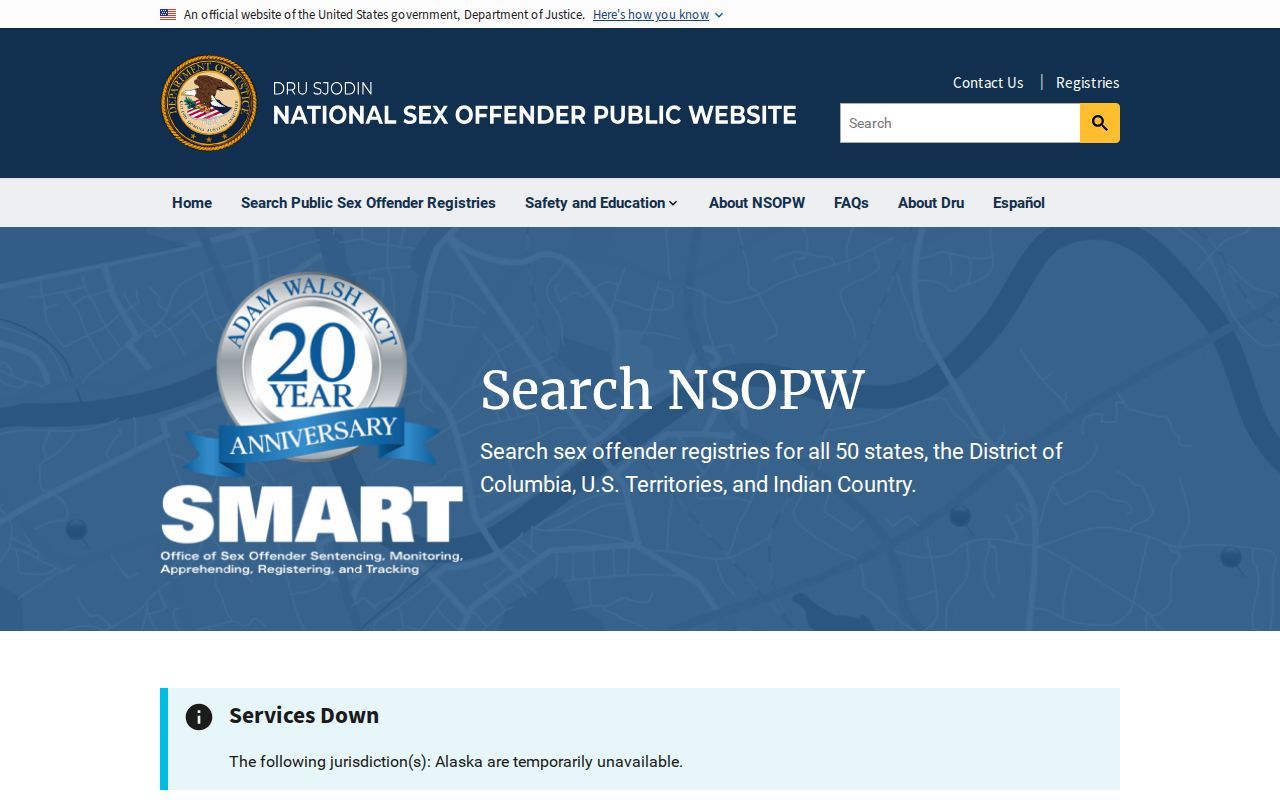
Use the national result as a lead, then confirm an Iowa match on the state registry and report a local compliance concern to Palo Alto County authorities.
Differences between the two result sets do not by themselves prove an error. Each jurisdiction publishes on its own timetable and within its own law. Compare the current Iowa profile, source jurisdiction, and displayed status. If those facts conflict, send the concern to the registering agency rather than trying to resolve it through personal contact.
Registration Levels and Duties in Iowa
Iowa uses offense-based tiers under section 692A.102, but tier alone does not fix every registration period. Section 692A.106 sets duration rules, and section 692A.107 can toll, or pause, the running of a period in specified circumstances. A court process under section 692A.128 controls any available modification. Searchers should avoid importing a simple federal ten, twenty-five, and life formula into Iowa law.
| Classification | Duration | Verification |
|---|---|---|
| Tier I | Set by section 692A.106, often a ten-year default unless another rule applies | Annual under section 692A.108 |
| Tier II | Set by section 692A.106, not an automatic federal-style twenty-five years | Every six months |
| Tier III | Set by section 692A.106, not lifetime solely because of the tier | Every three months |
| Special statutory category | Statute-specific and potentially lifetime | Apply the controlling statute and court determination |
The verification schedule is one reason a profile’s status and jurisdiction matter. It also explains the sheriff’s local role. Duration can change only through the law that applies to that registrant, not through a request by a public searcher.
Palo Alto County Registry Residency Rules
Iowa Code sections 692A.113 and 692A.114 address exclusion zones, presence, and residency restrictions. Those are related rules, but they are not the same. The statute includes child-care and school-related limits. It does not support a blanket claim that every person on the Palo Alto County registry is barred from every park, street, lake, or neighborhood.
The current Iowa Code chapter 692A is the source for classifications, registration duties, duration, public access, and place restrictions.
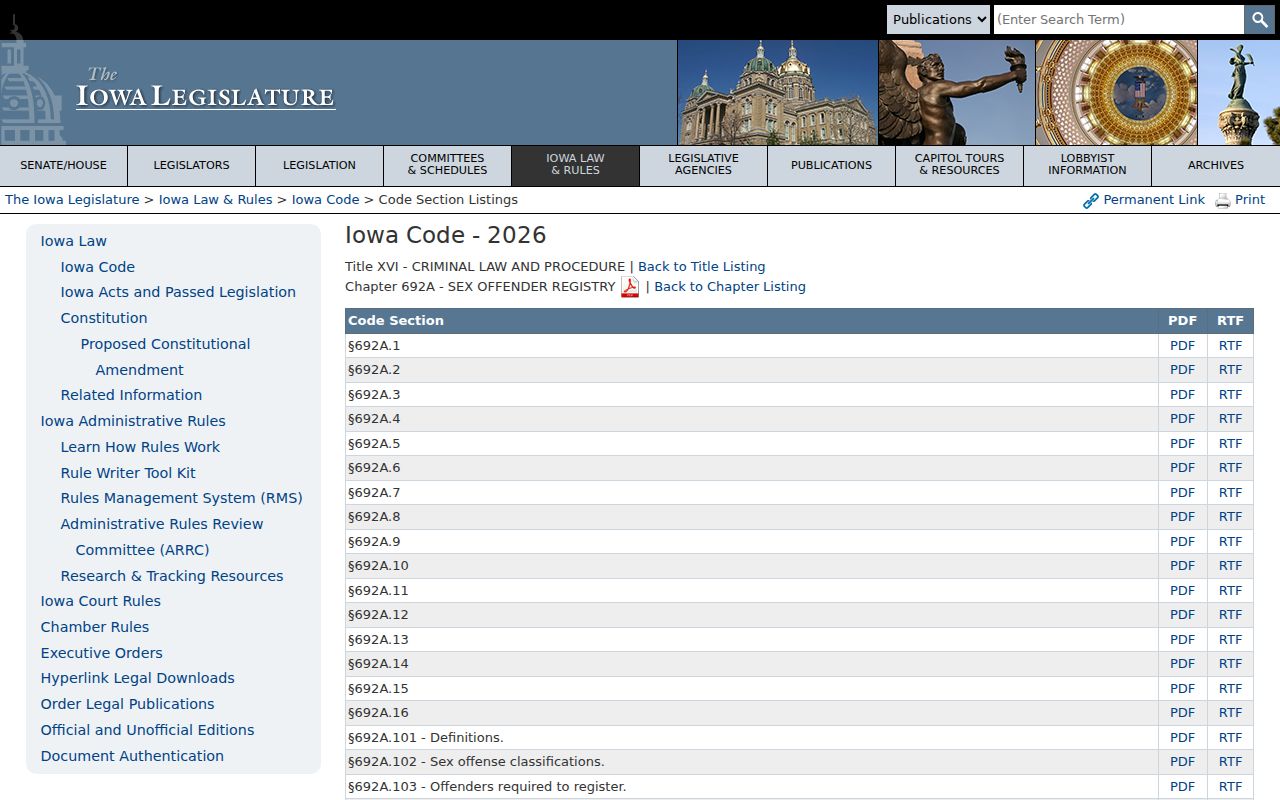
The statute page helps separate statewide legal rules from assumptions based only on a map pin or profile label.
A restriction question is fact-specific. The qualifying offense, victim age, statutory category, date, location type, and court orders can matter. Public users should read the live statute or seek legal advice for their own duty. Community members should use the registry for awareness without trying to enforce a restriction themselves.
Outdated Palo Alto County Registry Details
An address that looks stale should be reported, not tested through confrontation. Reopen the profile, confirm that the record is the intended person, and note the displayed address, status, and time checked. Then contact the Palo Alto County Sheriff at 712-852-3535 for a local matter or the DCI registry channel for a statewide portal issue. Provide the observed discrepancy, not a claim of guilt.
A delayed update can have several causes, including a move report, a verification cycle, or a jurisdiction transfer. Only the registering authority can determine whether the person failed a legal duty. A public search result cannot answer that issue by itself. For an urgent threat, call 911. For a routine concern, use the sheriff’s normal line and allow the agency to check the registration record.
Using Registry Information Lawfully
Palo Alto County registry information supports personal, family, and community safety. It may guide a conversation about routes, supervision, online conduct, or an area notification. It does not authorize harassment, threats, vigilantism, or discrimination. The portal warning should be followed each time information is used. A person’s household must not become a target because a registry profile points to an address.
Use registry data lawfully: Harassing, threatening, or intimidating a registrant or household can be a crime. Report suspected noncompliance to the Palo Alto County Sheriff or DCI, and never confront the person.
Registry status also should not be overstated. It reflects a statutory registration duty, while the underlying docket shows the court process and disposition. Verify a fact with the office that maintains it. A careful Palo Alto County lookup ends with the current Iowa profile and, when needed, a call to the sheriff.